Your Brain Is No Longer a Private Place
2026-02-28
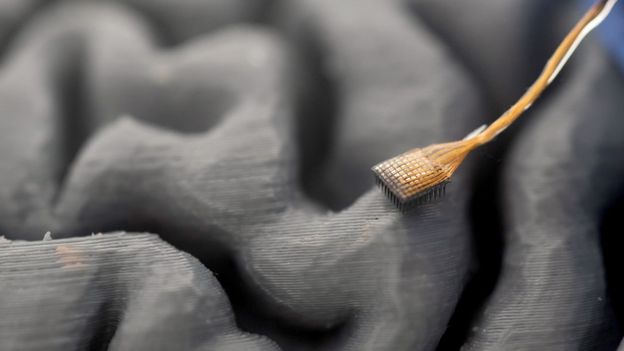
The Last Private Place on Earth
You have a voice in your head. We all do. It’s the narrator of our lives. The one that reminds you to buy milk, worries about a deadline, or replays a dumb thing you said five years ago at 3 a.m. It’s a constant, scrambled, messy monologue. And it’s always been yours and yours alone. The last truly private place on Earth. Until now.
That chaotic crackle of electricity inside your skull is no longer an unbreakable code. Scientists have found a key. And that key is artificial intelligence.
It sounds like science fiction, but it’s happening. Researchers have built what they call a “brain decoder.” It’s a system that can translate your brain activity into continuous, flowing language. It can literally read your inner thoughts.
How to Read a Mind
So how does it work? It’s not a helmet that magically prints out your daydreams. The process is complex, but the idea is surprisingly simple. It starts with a machine you’ve probably seen in a hospital drama, a functional magnetic resonance imaging (fMRI) machine. It’s a big, loud tube that can see how blood flows in your brain.
Participants in these studies lie inside one of these scanners and listen to stories or look at images. As they do, the fMRI records their brain activity. It’s watching which parts of the brain light up, creating a complex map of the brain's response. On its own, this map is just data. A jumble of signals that are almost impossible for a human to interpret.
This is where the AI comes in. A machine learning model is trained on this data. It learns to associate specific patterns of brain activity with specific words and ideas. It’s like learning a new language, but this language isn’t spoken. It’s the silent, internal language of an individual’s mind. After enough training, the AI can look at a new brain scan and make a pretty good guess at the story the person was hearing, or even caption an image they were seeing. In Japan, researchers have already revealed a similar "mind captioning" technique.
And it’s getting startlingly accurate. Some of these brain-computer interfaces are now decoding inner speech with up to 74% accuracy. This isn't just a party trick. It's a breakthrough.
A Voice for the Voiceless
Before we get lost in the dystopian fears, let’s talk about the incredible good this could do. Imagine being trapped inside your own body by paralysis. Your mind is sharp, your thoughts are clear, but you have no way to share them. No way to tell your family you love them. No way to express a simple need. It’s a profound isolation.
This technology could be their voice. The decoder could translate their intended speech, their inner monologue, into text or sound. It could restore the fundamental human need to communicate. For these patients, this isn't a scary new technology. It's hope. It's a bridge back to the world. It’s the potential to restore rapid, meaningful communication and change countless lives for the better.
A Conversation We Need to Have Now
But there’s an undeniable flip side. The door this opens is a big one, and we need to be careful about what comes through it. The research is already raising profound questions about consent and privacy.
Right now, the technology is non-invasive, relying on fMRI scans. You can’t have your mind read without knowing about it. But technology doesn't stand still. What happens when it gets smaller, faster, and easier to use? What happens when a system designed to help someone speak can also be used to listen in on thoughts they never intended to share?
Our thoughts are not curated. They are messy, fleeting, and sometimes contradictory. They are not meant for an audience. The development of this technology is moving faster than our conversations about its ethics. This isn’t a problem for the future. Researchers unveiled their success just last year. The time to talk about the rules, the boundaries, and the meaning of mental privacy is right now. We're not just decoding brainwaves. We're on the verge of decoding what it means to be human in a world where our last private space might not be private anymore.