Your Eyeballs Are the Newest Weapon Against AI Fakes
2026-04-18
Are You Even Real?
You’ve been there. Swiping through profiles, wondering which ones are genuine. Or maybe you're on a video call, and something just feels… off. A little too perfect. A little too strange. It’s a feeling that’s creeping into every corner of our digital lives. In a world full of AI, bots, and deepfakes, how can you be sure the person on the other side of the screen is actually a person at all?
It sounds like science fiction, but it's a real problem. The internet is getting weird. It’s getting harder to trust what you see. We’ve all heard the stories, from fake dating profiles designed to scam you, to sophisticated deepfake incidents that can trick even savvy professionals. The line between human and machine is blurring, and frankly, it's getting a little scary.
Your Eyeballs Are Your New Password
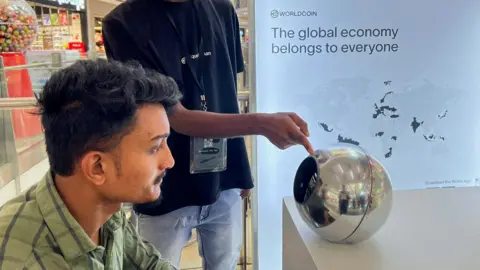
So, how do we fix this? How do we prove we’re human in a world full of convincing fakes? The answer, it turns out, is in your eyes. A company called World Network, co-founded by Sam Altman, is rolling out a wild solution. It involves a futuristic-looking device called an Orb, which scans your irises. Yes, your eyeballs.
This scan creates a unique, verified digital identity called a World ID. Think of it as a digital passport that screams, "I am a real, living, breathing human!" It’s a way to prove you’re you, without giving away a ton of personal data. And this tech isn't just a weird experiment. It's showing up in places you use every single day.
Making Dating Human Again
Let's talk about Tinder. The dating app is jumping on this "proof-of-human" train. They're integrating advanced eye-scanning technology to fight back against the endless tide of bots and fake profiles. The goal is to give users a way to prove they are who they say they are. Tinder is also rolling out a "Face Check" tool that uses a quick video selfie to match your face to your profile photos.
Successfully verified? You get a little badge on your profile. It’s a small thing, but it means a lot. It’s a sign of trust. It means the person you’re about to spend hours talking to is probably not a robot from a content farm. It’s about bringing a little bit of humanity back to the often frustrating world of online dating.
Is That Really Your Boss on the Screen?
The problem isn't just on dating apps. The professional world is getting hit hard, too. Zoom is now integrating World ID’s verification system to make your video calls more secure. Imagine joining a meeting and seeing a small badge on everyone’s video tile, confirming they are a verified human. The system uses a feature called “Deep Face” to prove, in real time, that the person on the call is the real deal.
This isn't just about feeling more comfortable. It's a massive security upgrade. It’s a direct response to the rise of deepfake technology being used for fraud. By verifying participants, Zoom is helping ensure that the person you think you're talking to is actually them, and not some AI-generated puppet.
An Internet for Humans
This might all feel a little strange. Scanning our eyeballs to log in to an app? It’s a big step. But it might just be what we need to save the internet from itself. The web was built on a certain level of trust, and that trust is eroding fast.
This "proof-of-human" technology is more than just a novelty feature for an app. It's a potential foundation for a new kind of internet. An internet where you know who you’re talking to. Where communities are made of people, not bots. It's a weird, futuristic, and slightly invasive idea. But in the face of an AI revolution, it might be the most human thing we can do.