Your Phone Isn't Listening, But the Government's New AI Is.
2026-04-27
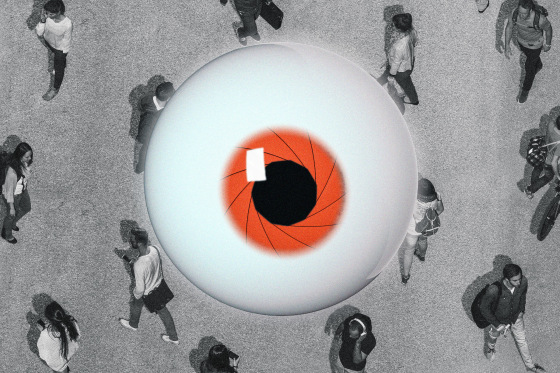
That Feeling You're Being Watched? It's About to Get Real.
Ever get that creepy feeling? The one where you swear an ad for something you just *thought* about pops up on your phone. We usually laugh it off. We blame our phones for listening. But what if that feeling wasn't just about ads for sneakers? What if it was something bigger, more official?
There's a quiet revolution happening in the halls of power, and it’s powered by artificial intelligence. The same tech that suggests your next movie is now being used to create a surveillance machine so powerful, it’s making some lawmakers seriously nervous. This isn't a sci-fi movie plot. It's happening right now.
For years, government agencies have collected mountains of data. Think of it as a giant warehouse filled with boxes of information, stacked to the ceiling. Finding anything specific was a nightmare, like looking for a single receipt in a landfill. It took time, warrants, and a lot of manpower. But AI just changed the game. It’s like a super-powered librarian who can read every box simultaneously, connect the dots between them in a split second, and hand over exactly what someone is looking for. Or, more unsettlingly, what they didn't even know they were looking for.
The New Digital Dragnet
What does this actually look like? It means AI can sift through oceans of digital information—your location data, social media posts, public records—with terrifying efficiency. Combine that with a network of cameras and facial recognition technology, and you have a system that can track people with incredible accuracy. The old barriers of time and resources are crumbling.
Think about journalists trying to protect their sources. Their work depends on privacy and trust. But when an AI can analyze communication patterns and location data, that protection evaporates. Think about activists or government critics. Suddenly, their right to dissent comes with a digital shadow, a permanent record of their movements and associations, all neatly compiled and analyzed by an algorithm.
This isn't just about catching bad guys anymore. The fear, whispered in meetings with tech executives and debated in congressional hearings, is that this technology is just too powerful to control. It creates a world where everyone is a potential suspect. A world where your data can be turned against you not because you've done anything wrong, but because a model concluded you might.
Our Laws Can't Keep Up
Here’s the real problem. Our laws were written for a different world. They were designed for a time when surveillance was hard. It required a warrant, a specific target, and a judge's approval. The system had brakes.
AI removes those brakes. The government can now buy huge datasets from private companies, information you willingly or unwillingly gave away. This creates a loophole big enough to drive a truck through. The system is being supercharged with congressional funding and massive investments in this new surveillance tech, and the legal framework is gasping to keep up.
Some lawmakers are starting to sound the alarm. They see a future where military actions could be second-guessed by an AI, or where citizens are constantly monitored by a system with no off-switch. They’re worried that we are building a tool of immense power without fully understanding its consequences. The debate is no longer about whether we can do this, but whether we should.
This is more than just a tech story. It's about what kind of society we want to live in. Do we want one where our every move is tracked and analyzed, just in case? Or do we believe that privacy is still worth fighting for? Because that choice is being made right now, not in a public vote, but in quiet funding decisions and the steady hum of data centers. And that should make everyone feel a little watched.